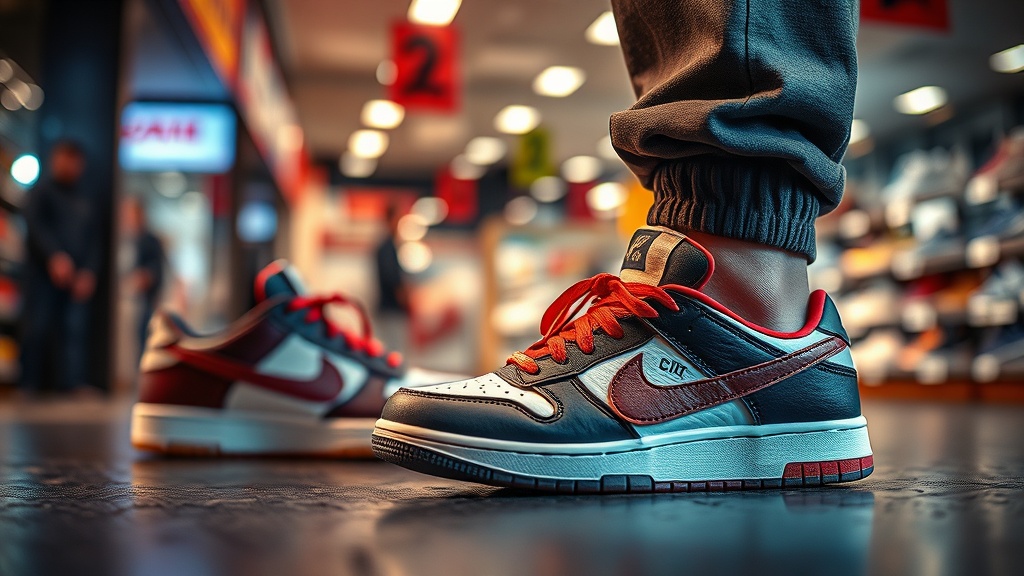
Why Do Sneaker Prices Fluctuate So Rapidly?

How much is my collection actually worth right now?
Have you ever checked a price tracker only to find that a pair of shoes you bought for \$300 is now trading for \$600, or perhaps even \$250? It feels unpredictable—almost like the market is moving on its own. Understanding the mechanics behind these price swings is the difference between being a passive buyer and a savvy collector. This post breaks down the economic drivers that dictate the value of high-end footwear and why certain pairs see massive spikes while others crash.
The secondary market for footwear isn't just a hobby; it's a complex ecosystem driven by scarcity, hype, and sheer human psychology. When we talk about value, we aren't just talking about the cost of leather and rubber. We are talking about the perceived rarity of a specific colorway or the cultural weight of a designer collaboration. If you want to keep your collection from losing value, you have to understand what makes a pair move.
What Drives the Value of a Sneaker?
At the core of every price movement is the concept of supply and demand. However, in the world of high-end collectibles, supply is often artificially limited. Brands like Nike or Adidas don't just release products; they release "drops." A drop is a controlled release where the number of units available is intentionally low compared to the number of people who want them. This creates an immediate spike in the resale value. If only 5,000 pairs of a specific collaboration exist worldwide, the price will naturally stay high because the supply is capped.
Beyond raw numbers, cultural relevance plays a massive role. A sneaker that is worn by a specific celebrity or featured in a viral music video can see its value jump overnight. This isn't just about the shoes—it's about the social capital they represent. When a design becomes a symbol of a certain era or a specific subculture, the demand shifts from collectors who want to wear them to investors who want to own them. This shift from "wearable item" to "asset" is where the real money is made (or lost).
To get a better sense of real-time market data, many collectors look at platforms like StockX to track historical sales and current lowest asks. Seeing these numbers move in real-time helps you realize that a pair of shoes is often treated more like a stock than a piece of clothing. You aren't just buying a product; you're buying a position in a market.
Why Do Some Pairs Lose Value So Fast?
You might notice that some shoes hold their value for years, while others plummet within months. This usually happens because of "over-saturation." If a brand releases too many colorways of the same model, the rarity of the original version vanishes. The hype dies down, and the secondary market becomes flooded. When everyone has a pair, nobody wants to pay a premium for it anymore. This is why "limited editions" are so highly guarded—once the novelty wears off, the price follows a predictable downward trend.
Another factor is the "trend cycle." What is cool today might be seen as dated tomorrow. In the world of fashion collectibles, trends move fast. A specific silhouette might be the hottest thing in the streets during a certain year, but if the culture shifts toward a different aesthetic, those once-expensive shoes become dead weight. It's a volatile cycle that requires constant attention if you're trying to build a profitable collection.
The Role of Condition and Authenticity
It isn't just about the hype; it's about the physical state of the item. A pair of shoes that has never been worn—often called "Deadstock" (DS)—will always command a higher price than a pair that has been worn once. Even if they are the same model, the condition dictates the ceiling of the price. Even a small amount of creasing or a slight yellowing of the sole can drop the value by 20% or more.
Furthermore, the threat of counterfeits keeps prices high for authentic pairs. As high-end sneakers become more expensive, the "reps" (replicas) become more sophisticated. This creates a paradox: as the quality of fakes improves, the value of a guaranteed-authentic pair increases because the risk of buying a fake becomes a major deterrent for buyers. For those looking to verify the legitimacy of a pair, resources like Sneaker News often provide insights into upcoming releases and authenticity-related discussions.
Can You Predict the Next Big Price Spike?
While no one has a crystal ball, there are patterns to watch. Generally, the biggest spikes occur when a brand announces a high-profile collaboration. If a brand like New Balance partners with a high-fashion house, you can almost guarantee the price will move. The key is to watch the news cycle. If a certain aesthetic is starting to dominate social media, that's often the time to look at the footwear associated with that style.
You should also keep an eye on the "archive" market. Sometimes, older, classic models that haven't been released in years see a sudden resurgence in value. This is often driven by nostalgia. When a new generation discovers a classic, the demand for the vintage versions spikes. It’s a slow-moving game, but it's one of the most reliable ways to see value growth over a long period. If you're playing the long game, you aren't looking for the next week's hype—you're looking for the next decade's icon.