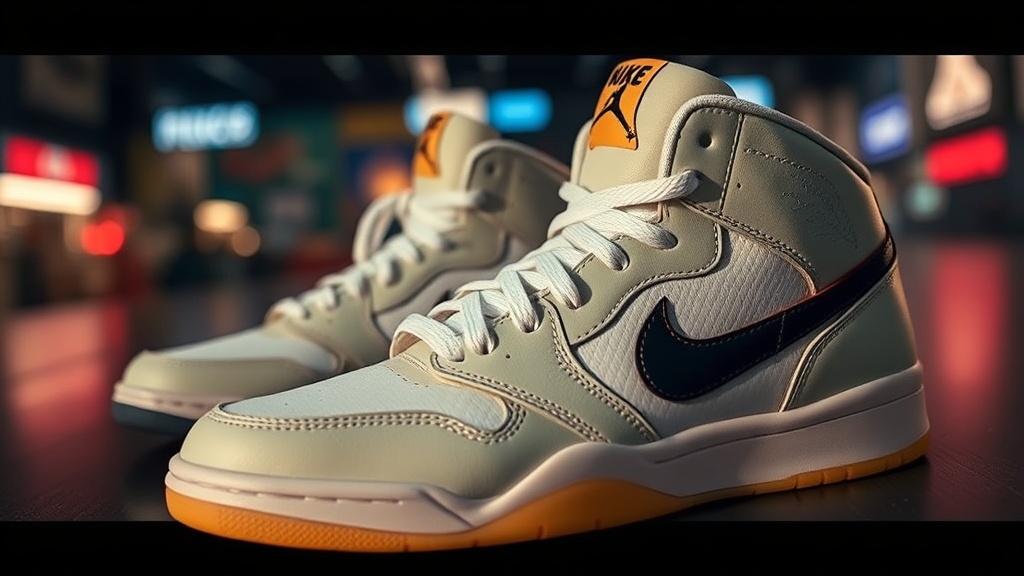
What Separates a $500 Pair From a $5,000 Grail in Today's Sneaker Market?

How Do Authentication Services Actually Work?
You're staring at a listing for a pair of 2011 Air Jordan 1 "Bred" Banned—the seller's photos look pristine, the price is right, and your finger hovers over the purchase button. But something feels off. How can you be certain those aren't convincing replicas before you drop two grand? The authentication question keeps every serious collector awake at night.
The sneaker resale market now moves billions annually, and with that money comes an entire ecosystem of fakes sophisticated enough to fool even experienced collectors. Third-party authentication services have stepped into this gap—companies like StockX and GOAT built their entire business models around verifying legitimacy before pairs reach buyers. But what actually happens during authentication?
Professional authenticators examine dozens of specific details: stitching patterns, font spacing on size tags, box label alignment, smell (yes, really—replicas often use cheaper adhesives with distinctive odors), and even the way light reflects off certain materials. A single mismatched stitch can flag a pair as counterfeit. These authenticators handle thousands of pairs weekly, building pattern recognition that software still struggles to replicate. When you're buying pre-verified sneakers through established platforms, you're essentially purchasing that expertise as a service.
That said, authentication isn't foolproof. New "super fakes" emerge constantly—replicas manufactured in the same factories as legitimate pairs, using identical materials and processes. Some collectors have started adding their own verification steps: photographing UV reactions on tags, measuring insole dimensions down to the millimeter, and documenting factory codes. The arms race between counterfeiters and authenticators never stops, which means your own education matters just as much as any third-party service.
Why Do Some Collaborations Resell for Thousands While Others Sit on Shelves?
The collaboration economy drives sneaker collecting more than almost any other factor. But anyone who's watched a hyped release crash in value—or seen an obscure pair skyrocket—knows that not all collaborations are created equal. What makes one partnership worth ten times another?
Scarcity drives the narrative, but it's scarcity combined with cultural cachet that creates genuine grails. When Travis Scott releases a Jordan 1 in limited numbers, the resale price reflects not just supply constraints but the artist's position within contemporary culture. Compare that to endless corporate collaborations—fast-food chains, video game publishers, car manufacturers—that flood outlets and sit discounted for months. The market has become remarkably efficient at separating genuine cultural moments from marketing exercises.
Historical significance compounds value over decades. The 1985 Air Jordan 1 isn't valuable simply because it's old—it's valuable because it represents a specific inflection point in both basketball and fashion history. Sneaker Freaker maintains extensive archives documenting these cultural touchpoints, and understanding them helps collectors predict which contemporary releases might appreciate similarly. The 2011 "Banned" Jordan 1 retro sold for $160 retail; deadstock pairs now command $2,000+ not because of materials but because of the story they carry.
Condition acts as the final multiplier. A worn pair of 1985 Jordan 1s might sell for $800. The same shoe in deadstock condition with original box, tissue paper, and receipt? $15,000 isn't uncommon. Collectors have developed increasingly granular condition standards—deadstock, deadstock with flaws, tried-on, excellent, very good, good, beater. Each tier represents roughly a 30-50% value difference. Some collectors specifically hunt worn pairs for display, arguing that creased leather tells a better story than pristine plastic. Others won't touch anything that isn't factory-fresh. Neither approach is wrong; they're simply different collecting philosophies.
Where Are Collectors Finding Undervalued Pairs Right Now?
The obvious sources—StockX, GOAT, eBay—are priced efficiently. Everyone sees those listings. The real collectors know that undervalued grails hide in estate sales, storage unit auctions, and Facebook Marketplace listings posted by people who inherited their nephew's collection without knowing what they have. These discoveries require work, patience, and knowledge.
Estate sales in particular reward those willing to dig. A collector who passed away in 2015 might have left behind a closet full of 2005-2010 Nike SB Dunks purchased at retail and forgotten. The family running the sale sees "old sneakers" and prices them at $20 per pair. You see the Chrome Ball Incident, the FLOMs, the original Tiffany highs—shoes that now resell for $1,500 to $5,000 depending on size and condition. These situations aren't mythical; they happen weekly in cities with established collecting cultures.
International markets create arbitrage opportunities too. Japanese sneaker culture developed differently than American collecting—different releases gained prominence, different colorways resonated. A shoe that sat on shelves in Osaka might command premium prices in Los Angeles. Conversely, American GR (general release) colorways sometimes achieve grail status in Tokyo. Savvy collectors maintain relationships with buyers in multiple countries, trading inventory across markets to exploit these pricing inefficiencies.
The digital equivalent happens in Facebook groups and Discord servers where collectors trade directly. Without platform fees eating 10-15% of each transaction, prices often run lower than public markets. The trade-off is risk—you're sending money to strangers without intermediary protection. Long-established communities develop reputation systems, reference checks, and escrow services to manage this. Joining these circles requires proving yourself, contributing value, and building relationships over months. The pairs you find there, though, often never reach public listings.
How Should You Store Investment-Grade Sneakers Long-Term?
Once you've acquired pairs worth protecting, storage becomes its own discipline. Heat, humidity, and light—the three enemies of sneaker preservation—work slowly but inevitably. A pair stored improperly for five years might develop yellowed soles, crumbling midsoles, or separated uppers. The financial loss can equal thousands of dollars.
Temperature control matters more than most collectors realize. Sneaker midsoles—particularly older polyurethane foam—degrade faster in warm environments. Ideally, storage stays below 70°F. Basements seem logical for space reasons but often run too humid; attics run too hot. Interior closets with climate control offer the best compromise. For serious collections, dedicated storage units with environmental monitoring justify their cost when the alternative is watching $50,000 in inventory yellow and crumble.
Container selection sparks endless debate. Original boxes work for short-term storage but offer minimal protection against humidity fluctuations. Clear plastic drop-front boxes allow display while blocking dust. Some collectors vacuum-seal pairs for maximum protection, though this creates its own risks—trapped moisture can breed mold, and removing sealed pairs for inspection becomes cumbersome. The obsessive go further: silica gel packets rotated quarterly, archival tissue paper replacing factory stuffing, UV-protective film on windows near display areas.
Rotation matters even for deadstock pairs. Shoes stored in the same position for years develop compression damage—foam midsoles harden, leather creases set permanently. Collectors serious about preservation occasionally pull pairs from storage, let materials breathe, flex soles gently, and return them to different positions. It's tedious work. But when you're holding a pair that could fund a semester of college, the twenty minutes every few months feels like cheap insurance.
What's Actually Worth Collecting in 2025?
The market has shifted dramatically from the hype-driven peak of 2019-2021. Prices on contemporary releases have softened across the board. Travis Scott Jordan 1s that traded for $2,000 now move at $800. The endless drip of "limited" releases has trained buyers to wait for discounts rather than pay premiums. This creates opportunity for collectors with longer time horizons.
Vintage running shoes—1970s and 1980s models from Nike, Adidas, and lesser-known brands like Onitsuka Tiger—represent undervalued territory. These predate the modern sneakerhead era and appeal to fashion historians, runners, and collectors simultaneously. Prices remain reasonable because supply hasn't been fully catalogued; these pairs hide in thrift stores and garage sales rather than consignment shops. The aesthetic has influenced contemporary designers heavily—knowing the originals provides collecting satisfaction beyond pure financial speculation.
Women's exclusives historically traded at discounts to men's equivalents, which created arbitrage opportunities that are now closing. As women's collecting has grown—both among women collectors and men who recognize the designs—prices on vintage women's colorways have appreciated faster than the broader market. The 2001 "Co.Jp" exclusive series, originally released only in Japan and primarily in smaller sizes, commands premiums today that would have seemed absurd five years ago.
Regional exclusives from the 2000s—European-only colorways, Asia-only collaborations—remain underappreciated relative to their scarcity. American collectors focused on domestic releases often ignore these entirely, creating pricing gaps. A Euro-exclusive Dunk High from 2003 might cost $300 while a comparable American release trades for $1,200. The gap makes no logical sense given actual production numbers; it's purely a function of market attention.
The final category worth watching: team-issued and player-exclusive sneakers. These never hit retail—they're manufactured for specific athletes and sometimes leak into collector hands through equipment managers, friends, or charity auctions. Documentation matters enormously here; a claimed player-exclusive without photo evidence of the athlete wearing them trades at a discount. With proper provenance, though, these represent the truest form of sneaker collecting—objects that existed in the professional sports world before entering the collector market. They're not for everyone. They're not even wearable in most cases. But they're irreplaceable, and that's the whole point.