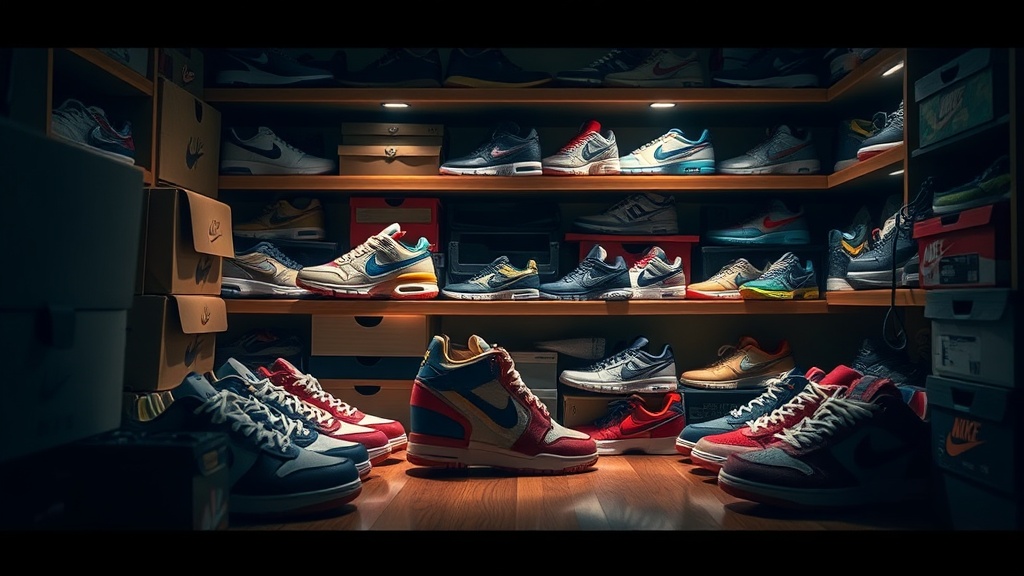
The Ultimate Guide to Storing and Preserving Your Sneaker Collection

This guide breaks down everything needed to keep sneakers in pristine condition—whether protecting five grails or five hundred. Heat, humidity, light exposure, and improper storage materials destroy collections silently over time. The methods here come from restoration specialists, museum conservation practices, and seasoned collectors who've learned through costly mistakes. You'll walk away knowing exactly what to buy, how to arrange your space, and which habits prevent yellowing, crumbling midsoles, and deteriorating materials.
How Should You Store Sneakers Long-Term?
Long-term storage requires controlling four variables: temperature (65-72°F), humidity (40-60%), light exposure (minimal UV), and air circulation. Get these right, and most sneakers last decades. Get them wrong, and even deadstock pairs deteriorate within years.
The first rule? Keep shoes in a climate-controlled space. Attics hit 120°F in summer. Basements breed mold. Garages fluctuate wildly. Inside the main living area works best—bedroom closets, spare rooms, or dedicated spaces with consistent conditions.
Here's the thing: not all containers work equally. Drop-front shoe boxes (like the ones from The Container Store or Drop Front Shoe Box by The Container Store) provide visibility and stackability while protecting from dust. Clear plastic bins work too, but ensure they're polypropylene—not PVC, which releases harmful gases over time.
Avoid cardboard for anything you truly value. It absorbs moisture, attracts pests, and offers zero protection from environmental swings. If you must use original boxes (some collectors prefer the aesthetic), place those boxes inside sealed plastic containers for double protection.
Silica gel packets help, but they're not magic. Replace them every six months—or use Eva-Dry renewable dehumidifiers for closet spaces. These small units absorb moisture for weeks, then recharge in a microwave. Cost-effective for serious collections.
What's the Best Way to Prevent Sneaker Yellowing?
Yellowing happens when midsole foams (EVA, PU) oxidize—usually accelerated by heat, UV light, and oxygen exposure. Prevention beats restoration every time, and the methods are surprisingly straightforward.
Store sneakers away from windows. UV rays degrade rubber and foam rapidly. Even indirect sunlight adds up over years. If your display area has natural light, install blackout curtains or UV-blocking film. The Gila UV Window Film available at hardware stores blocks 99% of UV rays without darkening rooms completely.
The catch? Midsoles will yellow eventually—that's just chemistry. But you can slow it dramatically. For white midsoles, some collectors apply sole protectors like Reshoevn8r Sole Shields or TredSole Protectors. These thin adhesive films create a barrier against oxidation and wear.
Vacuum-sealing remains controversial. It works for preventing yellowing—no oxygen, no oxidation. But long-term compression can damage shape and foam structure. Worth noting: if you vacuum-seal, don't compress fully. Leave some air space, store flat (never folded), and check annually.
For already-yellowed soles, 40 Volume Creme Developer (salon-grade hydrogen peroxide) combined with UV light can reverse oxidation. The "icing" process requires patience—multiple sessions, careful application avoiding uppers, and never leaving shoes in direct sun unattended. Heat warps shoes fast.
Should You Use Shoe Trees and What Kind?
Yes—but only certain types. Shoe trees maintain shape, absorb moisture, and prevent creasing in the toe box. Cheap plastic trees or spring-loaded cedar splits do more harm than good for high-value sneakers.
Invest in Woodlore Adjustable Shoe Trees or Stratton Cedar Shoe Trees for leather and premium sneakers. The cedar absorbs sweat and odors naturally. Adjustable width prevents overstretching. Expect to spend $15-25 per pair—expensive at scale, but consider it insurance.
For foam runners, mesh uppers, or knit constructions (Yeezy Foam Runners, Adidas Ultraboost, Nike Flyknit), skip traditional trees entirely. The pressure damages flexible materials. Instead, use sneaker shields—plastic inserts that sit inside the toe box preventing creases without applying outward pressure. Sneaker Shields and Force Fields are the two dominant brands; both cost around $10-15 per pair.
Here's the thing about cedar: it smells strong. Some collectors love it. Others worry about scent transfer. If you're sensitive to fragrance, look for unvarnished beechwood trees from Church's or Loake. Same shape preservation, no cedar aroma.
Table: Storage Methods by Sneaker Type
| Sneaker Type | Container | Trees/Shields | Special Considerations |
|---|---|---|---|
| Leather (Jordan 1, Dunk High) | Drop-front box or original box in bin | Cedar shoe trees | Condition leather annually with Venetian Shoe Cream |
| Knit/Mesh (Flyknit, Ultraboost) | Clear polypropylene bin | Sneaker shields only | Avoid compression; store loose, not stacked |
| Foam/EVA (Yeezy Foam Runner, Crocs) | Original box, ventilated | None needed | Keep away from heat—foam warps and shrinks |
| Canvas (Converse Chuck 70, Vans) | Drop-front box | Tissue stuffing or shields | Canvas yellows easily; silica gel mandatory |
| Suede/Nubuck (Travis Scott Jordan 1) | Original box with acid-free tissue | Cedar trees with care | Never use plastic directly—causes drying |
| Clear/Translucent (Off-White, Yeezy 350) | UV-protective drop-front | Sneaker shields | Clear soles yellow fastest—extra protection needed |
How Do You Organize a Large Collection?
Organization isn't just aesthetics—it's damage prevention. Stacks too high crush boxes at the bottom. Poor rotation leaves shoes compressed for years. Smart systems protect condition while making pairs accessible.
First, establish a rotation schedule. Shoes worn regularly need different storage than deadstock grails. Active rotation can stay in drop-fronts at eye level. Archive pieces belong in stacked bins, higher up, accessed rarely.
Label everything. Print small photos of each pair and attach to box fronts. Or use Collectr, SneakerCon, or StockX apps to track inventory digitally. Knowing what you own prevents buying duplicates—and helps locate specific pairs without opening twenty boxes.
Climate control at scale might mean a dedicated unit. The Whynter Elite 30-Bottle Wine Cooler gets repurposed by serious collectors for high-value pairs—precise temperature control, UV-resistant glass, consistent humidity. Overkill for most, but collectors with $50K+ in inventory consider it standard protection.
That said, you don't need professional equipment to protect a collection well. A bedroom closet with a dehumidifier (the hOmeLabs 1,500 Sq. Ft. Energy Star Dehumidifier runs quietly and costs under $200), proper containers, and consistent habits outperform expensive gear used inconsistently.
The Rotation System That Works
Seasoned collectors use a three-tier approach:
- Daily Rotation: 10-15 pairs worn regularly, stored in accessible drop-fronts, trees inserted after each wear, wiped down weekly
- Monthly Rotation: 20-30 seasonal or special pairs, stored in labeled bins, inspected quarterly for condition issues
- Archive: Investment pieces and deadstock, vacuum-sealed (loosely) or in original boxes with silica, stored in climate-controlled areas, checked annually
This system prevents the common mistake of wearing the same three pairs while fifty collect dust—or worse, forgetting about humidity damage until it's too late.
What Products Actually Work for Cleaning and Protection?
The market overflows with sneaker care products. Most are overpriced or ineffective. A short list of what restoration professionals actually use:
Cleaning: Jason Markk Premium Shoe Cleaner remains the gold standard—gentle on materials, effective on dirt, no harsh chemicals. For tougher stains, Reshoevn8r's soft-bristle brush and solution kit handles midsole scuffs without damaging paint. Angelus Easy Cleaner works for canvas and mesh specifically.
Protection: Spray-on protectants help, but expectations should be realistic. Crep Protect and Jason Markk Repel create hydrophobic barriers that bead water and resist stains—buying time to clean spills before they set. Neither makes shoes waterproof. Reapply every 4-6 wears.
Leather Care: Venetian Shoe Cream (neutral) conditions without darkening. Saphir Renovateur for premium leathers. Avoid mink oil—it darkens everything and can damage certain finishes.
Midsole Touch-ups: Angelus Acrylic Paint (white, flat finish) covers scuffs on rubber midsoles. Posca Paint Pens for small touch-ups. Sharpie Oil-Based Markers work in a pinch but fade over time.
"The best cleaning product is prevention. Wipe down after every wear. Store properly. Don't let dirt set in. Restoration costs ten times what prevention costs." — Vick Almighty, Reshoevn8r
Common Mistakes That Destroy Collections
Even experienced collectors make these errors:
- Storing near heating vents or radiators — Heat accelerates sole separation and foam degradation dramatically
- Using newspaper for stuffing — Newsprint transfers ink and acid to interior linings; use acid-free tissue or shoe trees
- Never wearing the shoes — Midsoles (especially PU foam) harden and crumble faster when unworn; rotate occasionally even if preserving
- Stacking boxes too high — Weight crushes lower boxes; keep stacks under five feet or use shelving
- Ignoring humidity until visible damage appears — Mold, mildew, and material rot start before you can see them
- Cleaning with harsh chemicals — Bleach, acetone, and alcohol strip finishes and weaken adhesives
The catch with "deadstock" culture? Keeping shoes unworn for decades often destroys them. Polyurethane midsoles (common in pre-2010 Nike models) have a shelf life. The chemical compound breaks down regardless of storage quality. If you own vintage heat—original Air Jordan 3s from 1988, 1994 Air Max 95s, early 2000s Dunks—the midsoles will crumble. Wear them or accept that one day they'll need professional restoration.
Building Your Setup Step by Step
Start with the environment, not the containers. Measure your closet's humidity with a $10 digital hygrometer. If it reads above 60%, address that first. A small dehumidifier changes everything.
Next, audit your collection. Count pairs. Categorize by material and value. Daily rotation gets premium access. Archive pieces get maximum protection. Be realistic about what you'll actually wear.
Buy containers in phases—twenty drop-front boxes cost $200-300. Spreading purchases across paychecks hurts less. Watch for Container Store sales (March and September typically) or buy in bulk from Homie or Boxed Up for discounts.
Establish weekly and monthly habits. Wipe down worn pairs before storing. Check silica packets. Rotate stock. These small actions compound into collection longevity.
Your sneakers represent money spent, memories made, and culture participated in. Protecting them isn't obsession—it's respect for the objects and what they represent. Start with the basics, build systematically, and your collection will outlast trends, fads, and the slow decay that claims neglected pairs.