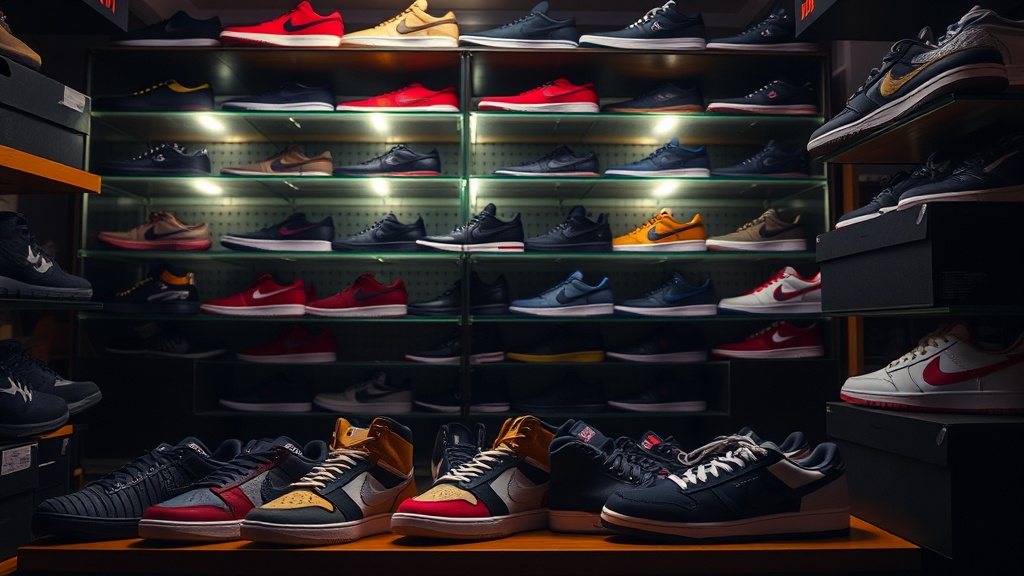
How to Properly Store and Display Your Sneaker Collection

This guide covers proven storage and display methods for sneaker collections of any size—from a dozen grails to a warehouse full of heat. The right approach protects condition, maximizes space, and turns your collection into a showcase worth staring at. Whether you're safeguarding deadstock pairs for resale or displaying daily rotation beaters, these techniques will keep every shoe looking its best for years.
What's the Best Way to Store Sneakers Long-Term?
Climate control and protection from light are your priorities. Heat and UV rays degrade midsole foam and yellow translucent soles faster than wear itself. The ideal storage environment stays between 65-72°F with relative humidity around 55%—think wine cellar conditions, not a garage in Arizona.
Original boxes work fine for basic storage, but they weren't built for decades of preservation. Upgrade to clear drop-front boxes from Container Store (their Drop-Front Shoe Box runs about $10 each) or bulk buys from The Home Depot's HDX line. You'll want something stackable, ventilated, and easy to access without unstacking towers.
Here's the thing—sneakers need to breathe. Completely airtight storage traps moisture from factory glues and your own climate. Add silica gel packets (the kind that ship with electronics work fine) to each box, replacing them every six months. Cedar shoe trees from Woodlore or FootFitter maintain shape and absorb moisture without the acidic breakdown that cheap plastic trees can cause over time.
For deadstock preservation, consider the "double-bag method" pioneered by serious collectors: place shoes in a cotton dust bag first, then a clear archival poly bag. This blocks dust while allowing minimal air exchange. Sneaker Flea and Sneaker Con's storage line both sell archival-grade bags sized specifically for high-top and low-top silhouettes.
How Should You Display Sneakers in a Small Apartment?
Vertical solutions win every time. Wall-mounted shelving, over-door organizers, and under-bed storage reclaim floor space while keeping collections visible and accessible. The goal isn't hiding shoes—it's integrating them into your living space without creating clutter.
IKEA's LACK floating shelves remain the go-to budget option at $15-25 per shelf. They hold 2-3 pairs each, install with basic tools, and disappear visually against white walls. For something more substantial, Home Depot's ClosetMaid wire shelving cuts to length and supports serious weight—perfect for displaying heavy SB Dunks or Timbs.
The catch? Most apartments prohibit wall damage. Enter tension-rod systems and freestanding options:
- The Container Store's Elfa Door & Wall Rack hangs over doors without screws
- Whitmor's Over-the-Door Shoe Organizer fits 24 pairs at under $20
- Amazon's SONGMICS 10-Tier Shoe Rack stands independently and holds 50+ pairs
Lighting transforms displays from storage to gallery. LED strip lights from Philips Hue or budget Govee options add color control and eliminate the shadows that make collections look like clutter. Install strips above each shelf, not below—up-lighting creates harsh shadows and highlights dust.
Rotation matters too. Keep a "current rotation" of 3-5 pairs accessible on a low shelf or rack. Store the rest. This prevents decision fatigue and protects grails from daily UV exposure near windows.
Are Clear Shoe Boxes Worth the Investment?
Yes—if you have more than 20 pairs. The time saved finding specific shoes and the protection from dust, pet hair, and accidents pays for the upfront cost within a year. Individual boxes also move with you, whereas built-in shelving stays behind.
Not all clear boxes are equal. Here's how the major options compare:
| Brand/Product | Price (per box) | Size (L x W x H) | Best For |
|---|---|---|---|
| Container Store Drop-Front | $9.99 | 13.2" x 9" x 7.3" | Most Jordans, Yeezys |
| The Sneaker Box Co. OG | $7.50 (bulk) | 14" x 10" x 8" | High-tops, boots |
| Drop Front Shoe Box (Amazon generic) | $4.50 | 13" x 9" x 5.5" | Low-tops, budget builds |
| SupBro LED Display Case | $89 | 14" x 11" x 9" | Single grail showcase |
| Crep Protect Crate | $12 | 13" x 9" x 7" | Stacking, durability |
That said, boxes aren't mandatory. Some collectors prefer open shelving with dusting routines. It's faster access, cheaper upfront, and works fine for daily beaters you actually wear. The risk? One spilled drink or curious pet can ruin a $500 pair. Worth noting: most homeowner's and renter's insurance won't cover sneaker collections without a separate rider—document everything with photos either way.
How Do You Protect Sneakers from Yellowing and Crumbling?
Midsole crumble and yellowing result from oxidation—a chemical reaction between oxygen and the foam/rubber compounds. You can't stop it entirely, but you can slow it dramatically. The key is limiting oxygen exposure, UV light, and temperature fluctuations.
Store shoes away from windows. UV rays penetrate glass and accelerate both yellowing and adhesive breakdown. If display shelves must face windows, apply 3M UV-blocking window film (about $30 for a 3ft x 6ft roll). It's nearly invisible and cuts 99% of harmful rays.
For soles already showing oxidation, 40 Volume Creme Developer (available at Sally Beauty Supply) combined with UV light can reverse yellowing on icy soles. It's a careful process—wrap uppers in plastic, apply creme to soles only, and expose to direct sunlight or a UV lamp for 2-6 hours. The r/Sneakers subreddit Wiki maintains detailed guides with before/after photos.
Midsole crumble hits polyurethane (PU) foam hardest—common in 90s and early 2000s Nike models. Once crumbling starts, it's irreversible. Preventative "wear" actually helps: the compression and release of walking keeps PU flexible. Deadstock 1999 Dunks in a closet will likely crumble before 1999 Dunks worn monthly. Rotate vintage pairs onto your feet periodically.
Humidity Control by Region
Oakland's Mediterranean climate is actually ideal—dry summers, mild winters, minimal humidity swings. Collectors in Miami, Houston, or New Orleans face bigger challenges. A Frigidaire 50-pint dehumidifier ($200-250) protects entire rooms. For closet storage, Eva-Dry mini dehumidifiers ($15 each) recharge in a microwave and handle 10-15 square feet.
Monitor conditions with a basic hygrometer. AcuRite's digital thermometer/hygrometer costs under $15 and tracks highs and lows. You're aiming for 45-60% relative humidity year-round.
What Display Options Work for Resellers vs. Personal Collections?
Resellers need inventory systems—scan-able, searchable, space-efficient. Personal collectors prioritize aesthetics and accessibility. The same box that works for Instagram photos might slow down a reseller shipping 20 pairs daily.
For resellers, consider the "banker box" method: labeled corrugated boxes (Home Depot's Heavy-Duty Small Box at $1.58 each) with printed inventory sheets taped to the side. Stack by size or SKU. It's not photogenic, but you can store 200+ pairs in a closet and locate any pair in under 60 seconds. Add barcode labels and a simple spreadsheet (or apps like SoleSavy or StockX Pro) for tracking.
Personal collectors should think in terms of "gallery walls." Varying shelf heights, mixing in sneaker-related art or photography, and creating negative space between groupings elevates the look. GOAT and StockX authentication tags can stay on—some collectors even frame them beside the corresponding shoe as provenance.
Themed displays tell stories. Group by colorway, by era (1985-1995 Jordan run), by designer (Virgil's Off-White Nike canon), or by personal significance (every pair from high school). Stories make collections memorable. Visitors don't remember "the wall of 50 boxes"—they remember "the display about your first concert."
Maintaining Your Storage System
Set calendar reminders for quarterly maintenance. Check silica packets (replace when saturated), wipe down boxes, and inspect for pest signs—moths love natural leather, and silverfish munch cardboard. A quick 30-minute routine prevents expensive surprises.
Rotate displayed pairs monthly if possible. Shoes sitting in the same position develop permanent creases and fade unevenly. Even a simple swap—left shelf to right, right to center—distributes light exposure and weight stress.
Keep cleaning supplies accessible but separate. Jason Markk solution, Crep Protect wipes, and spare laces belong in a caddy or drawer, not loose among boxes. You won't clean shoes if the supplies require a hunt.
Finally, plan for growth. Build to 80% capacity, not 100%. Every collector underestimates how quickly "a few more pairs" multiply. Leave space for the next cop—because there's always a next cop.
Steps
- 1
Choose the Right Storage Environment with Climate Control
- 2
Select Protective Display Cases or Clear Drop-Front Boxes
- 3
Implement UV Protection and Proper Lighting Solutions