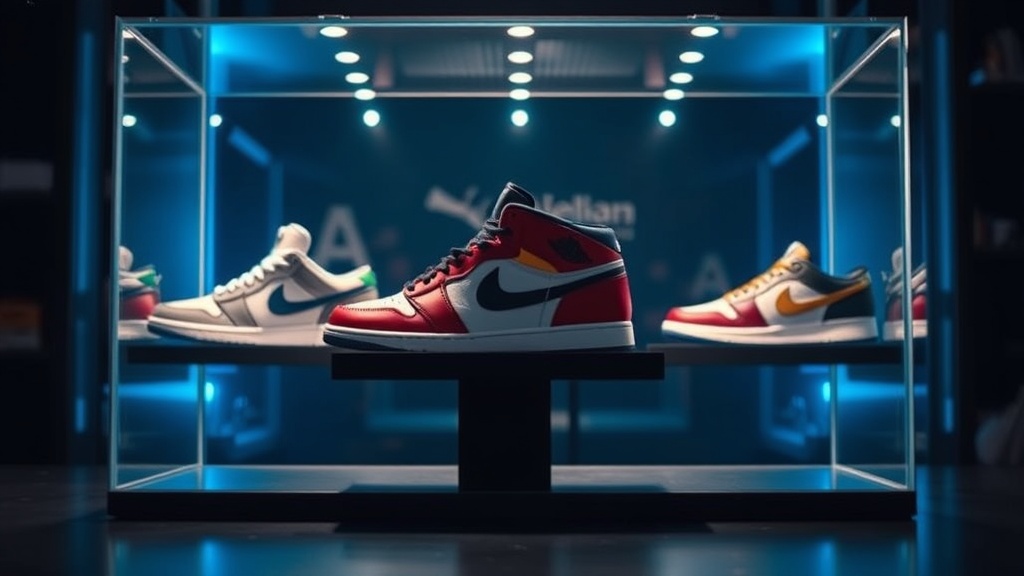
5 Essential Display Cases Every Serious Sneaker Collector Needs

Drop-Front Clear Sneaker Boxes
LED-Lit Acrylic Display Cases
Stackable Magnetic Shoe Containers
Climate-Controlled Display Cabinets
Wall-Mounted Floating Sneaker Shelves
You've dropped serious money on grails. Deadstock Off-Whites. Vintage Dunks. Collabs that took three raffles to score. But here's the thing — stuff them in a closet and they might as well be $80 outlet finds. The right display case protects your investment, shows off the details that make each pair special, and turns a collection into something worth looking at. This guide breaks down five display options that actually work — from budget-friendly acrylic boxes to custom builds that'll make your wall look like a boutique.
What's the Best Display Case for High-Value Sneakers?
The best display case for expensive sneakers combines UV protection, dust sealing, and security features without blocking the view. The Sneaker Throne Drop-Front hits this sweet spot at around $89 per case — stackable, magnetic front panels, and clear sides that don't distort colors.
Here's what separates serious cases from the $15 Amazon basics that yellow after six months:
- UV-resistant acrylic or polycarbonate — regular plastic breaks down and turns cloudy
- Magnetic or gasket seals — keeps dust out (and it's surprising how much accumulates)
- Drop-front or side-access design — because unstacking twenty boxes to grab one pair gets old fast
- Stacking hardware — stability matters when you're ten cases high
The catch? Most collectors mix and match. Your beaters can live in basic Container Store drop-fronts — about $8 each when bought in bulk. But for the Heat? That's where you invest. The SupBro LED Sneaker Box runs $65 per unit but includes motion-activated lighting and a rechargeable battery that lasts months. Worth it when you're showing off those Travis Scott fragments.
How Do You Display Sneakers Without Damaging Them?
You don't. Not without paying attention to materials, positioning, and environment. Direct sunlight destroys midsoles. Humidity breeds mold in canvas. And that "floating" magnetic display everyone's buying? The magnets can demagnetize — dropping your $1,200 pair four feet to the floor.
Several display types balance protection with presentation:
Acrylic Drop-Front Boxes
The industry standard for good reason. Brands like Crep Protect Crates, Sneaker Flea Boxes, and BoxedUp dominate here. They're roughly 14" × 10" × 7" — big enough for most size 13s with some breathing room. The drop-front means you can grab Tuesday's rotation without unstacking everything.
That said, not all acrylic is equal. Look for 3mm thickness minimum. Anything thinner warps under weight and cracks at the corners. The Drop-Front Shoe Box from The Container Store uses a slightly thicker 4mm acrylic that's held up in collector setups for years.
Wall-Mounted Clear Cases
For the "gallery wall" look — popularized by collectors like Complex's sneaker coverage — you want mounted individual cases. The Looksee Designs Acrylic Wall Mount ($45 each) includes a hidden mounting bracket that sits flush. The downside? You're drilling into drywall, and repositioning means patching holes.
Worth noting: wall mounting works best for display pairs — the ones you rotate out seasonally. Daily drivers need accessibility that wall mounts don't provide.
Glass Display Cabinets
IKEA's Detolf remains the go-to budget option at $70. Four shelves, tempered glass, magnetic closure. The problem? No dust sealing — you'll be wiping down shelves weekly. And the shelves flex under weight; more than three pairs per shelf risks sagging.
For serious collections, the DisplayGifts Pro series runs $300–$600 but includes LED strips, locking doors, and proper weight distribution. These show up in retail consignment shops for a reason — they look professional because they are.
| Display Type | Price Per Pair | Best For | Drawback |
|---|---|---|---|
| Basic Drop-Front Acrylic | $8–$12 | Bulk storage, beaters | No UV protection, yellows over time |
| Sneaker Throne / SupBro LED | $65–$89 | High-value singles | Power management for lit versions |
| IKEA Detolf | $3–$4 (per shelf space) | Large collections, budget builds | Dust, weight limits, no locking |
| DisplayGifts Pro | $25–$40 (amortized) | Retail-quality presentation | Space requirements, assembly |
| Custom Built-Ins | $150+ per pair | Permanent installations | No flexibility, professional install |
Do LED Lights Damage Sneakers Over Time?
Standard LEDs don't — UV-emitting ones absolutely do. The heat from poorly ventilated lighting can also degrade adhesives and cause yellowing. Here's the thing: most "sneaker box" LEDs are safe because they use low-temperature strips with minimal UV output. But cheap Amazon knockoffs? They sometimes use unfiltered bulbs that'll age your whites faster than a basement storage unit.
The Sneaker Flea LED Box uses 3000K warm white LEDs — easy on the eyes, no UV spectrum. The DropFront LED V2 includes a dimmer switch, which matters more than you'd think. Full brightness at 2 AM hits different when you're trying to sleep.
Positioning matters too. Lights mounted above the shoe (shining down) look dramatic but create harsh shadows. Side-mounted strips — like those in the SupBro cases — provide even illumination that shows off materials and stitching without washing out colors.
If you're building custom, Philips Hue light strips work well — set them to 2700K and keep brightness under 70%. The app control means you can schedule them off during peak UV hours (windows + artificial light = compounding damage).
What's the Most Space-Efficient Way to Display 50+ Pairs?
Modular stackables — but not the ones you're thinking. Traditional front-loading boxes create a solid wall that looks imposing but wastes vertical space. The Drop-Front Pro from Sneaker Politics (yes, the New Orleans shop) uses a slightly shorter profile — 6.5" height versus the standard 7.2" — letting you fit an extra row in standard 8-foot ceilings.
Floor-to-ceiling installations work best with a hybrid approach:
- Bottom two rows: Pull-out drawers or drop-fronts for daily rotation
- Middle section (eye level): Clear acrylic with lighting for display pieces
- Top rows: Solid-front storage — out of sight, out of mind, protected from dust
The ShoeBoxOne Modular System includes connecting hardware that locks units together — no more toppling towers when the cat decides to explore. At $49 per box, it's mid-range pricing with high-end stability.
For closet conversions, the ClosetMaid ShelfTrack system paired with clear acrylic shelves (custom cut from TAP Plastics — most major cities have locations) creates a floating display that uses depth, not just width. A standard 24" deep closet can hold three pairs per shelf with this setup.
Are Custom Display Cases Worth the Investment?
At $500+ per pair installed? Only if you're displaying five-figure grails or running a resale business where presentation affects pricing. For everyone else — the ROI isn't there. That said, there's something to be said for built-ins if you're renovating anyway.
Custom work from Collective Displays (Los Angeles) or Sneaker Kube (Atlanta) starts around $300 per unit and includes:
- Hardwired LED integration
- Climate control elements (mini dehumidifiers, air circulation)
- Security features (locks, tamper-proof mounting)
- Material matching to your space
Here's the thing — most collectors who go custom end up regretting the inflexibility. Your collection grows. Your taste changes. That wall of 24 custom cases looks great until you downsize or move. Modular systems let you adapt. Custom is commitment.
The middle path? Semi-custom. Companies like DisplayGifts and Sneaker Throne offer custom sizing and color-matched frames without the permanent installation. You get the bespoke look with the ability to reconfigure — and take it with you when you upgrade apartments.
Red Flags in Display Cases
Before buying anything — check reviews for these specific issues:
- Magnet strength: Weak magnets mean doors that pop open randomly
- Acrylic clarity: Some manufacturers use recycled material that looks cloudy out of the box
- Corner cracking: Search reviews for "crack" — stress fractures usually appear within months if the design is flawed
- Color accuracy: Cheap cases sometimes have a blue or yellow tint that makes white sneakers look wrong
The Oakland consignment scene — where Finn Larsen built his reputation — taught this lesson early. Displays aren't just storage. They're part of the valuation. A pair in a premium case with proper lighting commands more respect (and often a higher price) than the same pair stuffed in a cardboard box. Whether you're protecting personal grails or building inventory, the case matters almost as much as the contents.
Start with five quality drop-fronts for your rotation. Add lighting for the pieces that deserve it. Build upward and outward as the collection grows. And remember — the best display case is the one that actually gets used, not the one sitting in an Amazon cart while your heat collects dust in the closet.